

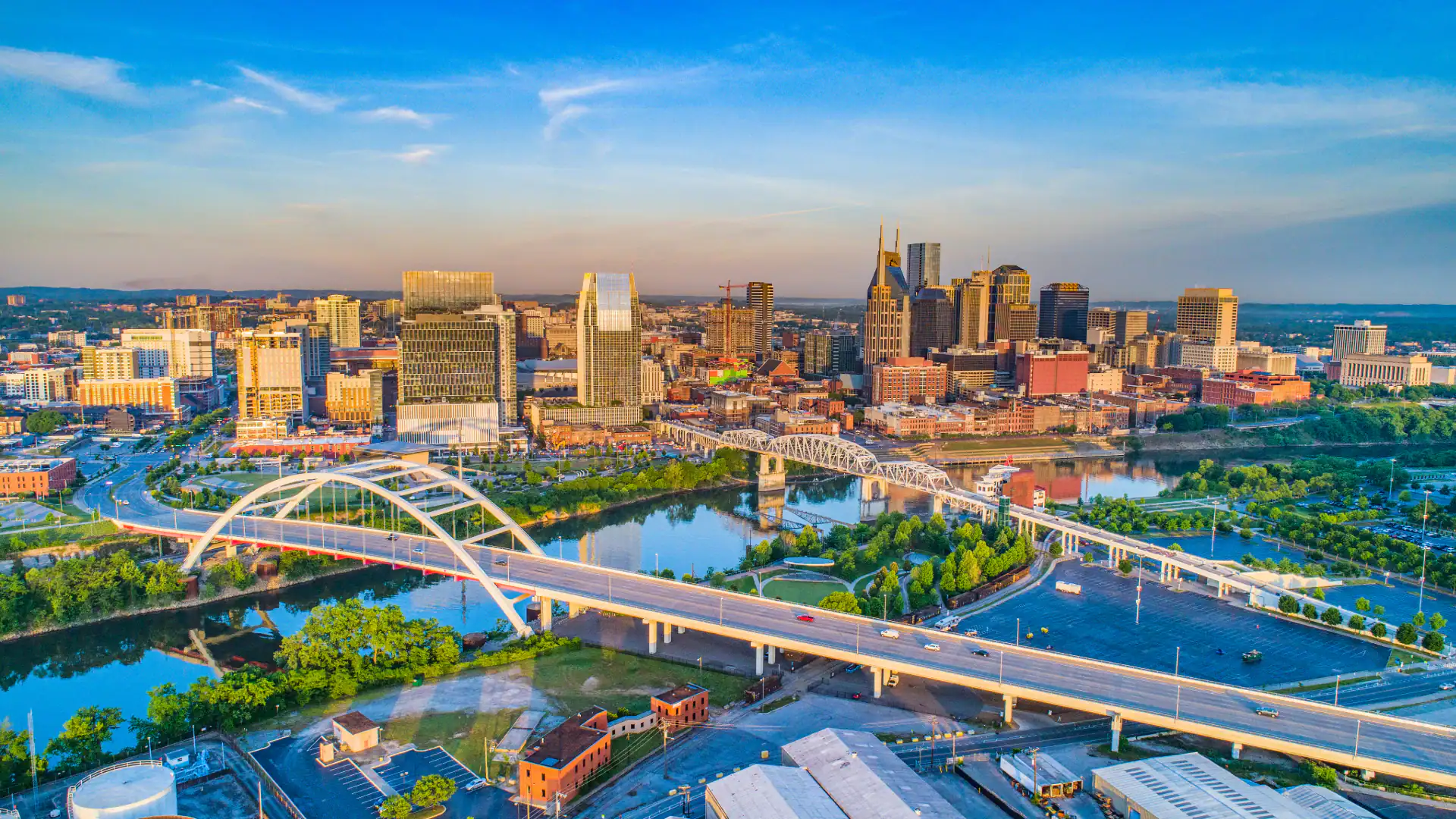
Nashville isn’t just growing; it’s exploding. The purpose of this piece is to explore what Nashville’s popularity means for convenience retailers.
National Brands Make Nashville Home
To say that national brands are investing in Nashville would be an understatement. In the past several years, some of the biggest brands in the country have made moves that will help shape Nashville’s convenience retail environment for the next decade:
- Oracle’s Billion-Dollar Investment
Oracle has committed $1.2 billion and 8,000+ jobs to its new East Bank development on the north side of the Cumberland River — $175 million in infrastructure, 2+ million SF of office space, including a Nobu-branded hotel. - Starbucks Expansion
Starbucks is investing $100 million and creating roughly 2,000 jobs with its new Southeast Corporate office — a ~250,000 SF lease in Peabody Union on the south bank. - Amazon’s Operations Center of Excellence
With more than $5 billion invested over the last decade, Amazon remains bullish on Nashville. Its newest development is a $200 million, 5,000+ job Operations Center of Excellence in Nashville Yards. - In-N-Out Burger Goes East
In its first expansion east of Texas in company history, In-N-Out has invested $120+ million in Middle Tennessee over the past 3 years. Their eastern territory HQ be opening this year in Franklin, bringing 200+ jobs.

Large companies moving their headquarters to Nashville is just a part of the story though. Convenience retailers are racing to establish a presence in the city and the state:
- Wawa, the popular northeast sub and coffee chain, will open 7 locations in 2026 with plans to open another 50 locations in the next 10 years.
- Dutch Bros, the up-and-coming coffee chain, already has 39 locations in Tennessee, with more locations planned to open in 2026.
- West-Coast Burger brand In-N-Out has 5 locations open with plans to open another 30.
- RaceTrac, the popular quick-stop brand, recently announced plans to open 50 stores in the next 5 years.
- Moxies, Culver’s, Dave’s Hot Chicken and Chicken Salad Chick have all announced, or hinted at, future Tennessee growth.
National brands are moving in. Smaller brands are following their lead. Convenience retail operators see which way the wind is blowing and have moved aggressively into the market.
Firing on All Cylinders
Expansion That Reaches Far and Wide
The ripple effects of these investments show up in economic diversification and infrastructure development, but they also show up in population growth. Nashville was one of the top regions in the country for population growth between mid-2024 and mid-2025 (U.S. Census Bureau). A strong healthcare base — anchored by HCA Healthcare and Vanderbilt University Medical Center — contributes more than 330,000 jobs and an estimated $68 billion annually. That diversification is part of what helps ensure Nashville’s continued growth. However, it’s not just Metro Nashville that’s growing.
Nashville’s suburbs are outpacing the nation by a wide margin: projected growth of 6%–10% through 2030, versus a national average of just 3.1% since 2020 (roughly 0.6% a year).

Growth Doesn’t Stop at the City Line
Metro Nashville is where the story started but growth is moving outward, assisted by momentum in Tennessee’s other large cities. The Chattanooga metro market grew 5.5% from 2020 to 2025 while Knoxville captured almost 19% of Tennessee’s net inbound migration over that same period, trailing only Nashville. That growth isn’t staying contained in the cities, it’s filling in the corridors between them and Nashville, one submarket at a time.
Here’s an overview of just some of the development in Nashville’s outlying suburbs:
- Murfreesboro: 273 development projects in the planning/zoning pipeline this year, mostly residential. Honorable mention: Project Keystone, a $150 million, 7-acre mixed-use downtown redevelopment with 300+ livable spaces, a boutique hotel, and retail space.
- Franklin: 94 tracked development projects and $70+ million in infrastructure improvements this year, including road widening and bike-safety upgrades.
- Lebanon: 24 tracked developments; neighboring Mt. Juliet (Wilson County) has 44 more planned and has grown ~17% in the past 5 years.
- Gallatin: 66 tracked projects. Gallatin is the first city in Tennessee to establish an Infrastructure Development District, built to support this level of growth without overburdening local taxpayers.
- Columbia (Maury County): Tennessee’s fastest-growing county, drawing more than $4.3 billion in capital investment over an 18-month span — anchored by GM’s $2.3 billion Ultium Cells EV battery plant in Spring Hill and its 1,300 jobs.
- Shelbyville (Bedford County): Population grew 6.37% between 2020 and 2023 — more than six times the national growth rate over the same span.
Sales are Booming
New residents are arriving at a persistently high rate, and consumer spending and sales tax receipts keep beating state estimates. In Q1 2026, CRE sales volume was up 75% year-over-year to more than $365 million. Transaction activity has not just recovered from the pandemic; it has surpassed it. The Nashville retail market already ranks in the top 10 tightest nationally, and median household income is projected to top $115,000 within 5 years. That’s the kind of purchasing power that keeps money flowing into local economies.
Retail vacancy sits at just 3.9% as of Q1 2026 — among the lowest of any major U.S. market — while asking rents have climbed to roughly $28/SF NNN, up 13.5% year-over-year and nearly 36% over the past 5 years. When prices climb this fast in a market this tight, that’s demand talking.
This is a market where hesitation is getting more expensive.
Time Is of the Essence
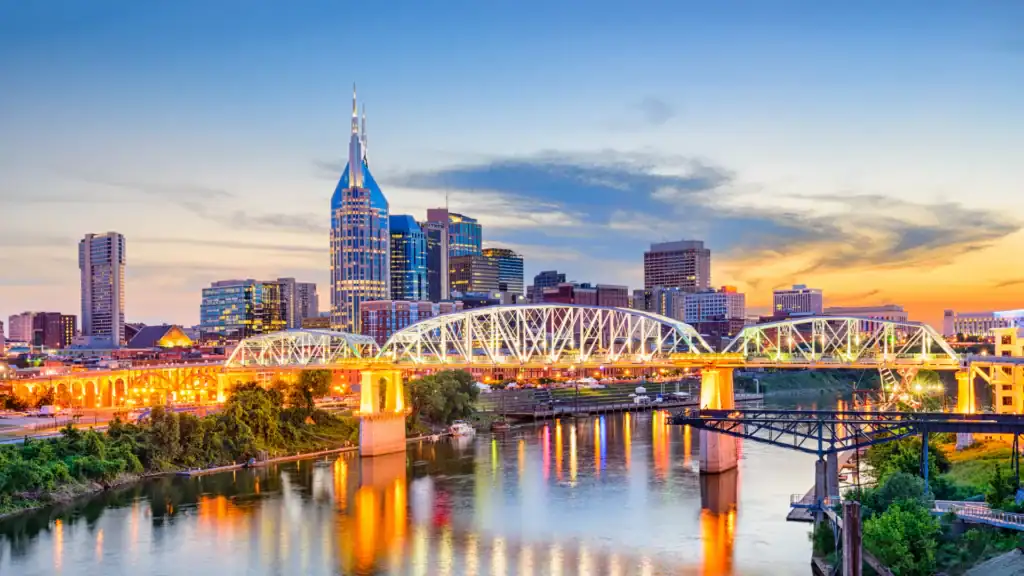
There is a pricing race brewing in music city. Rents will continue to increase, and positioning will become even more competitive. What were once sleepy bedroom communities will continue to become bustling hubs led by brands and operators that are making plans now. National retailers are currently staking their claim. Nashville isn’t slowing down. Businesses looking to enter or expand in Tennessee have a real, but shrinking opportunity to get in before the window closes.
Legacy Commercial Property has active development opportunities in 7 of the markets covered in this piece. Legacy is seizing the opportunity in Nashville’s suburbs. With developments ranging from 4,000 to 12,000+ SF, in submarkets where retail vacancy is currently exceptionally low, we’re ideally positioned to continue to lead Nashville’s convenience retail expansion.
To learn more about what’s at stake in the Nashville market, reach out to the Legacy Commercial Property team now. To learn more about our active developments, click the links below:
- 1726 Columbia Avenue, Franklin, TN
- 5001 Gallatin Pike, Nashville, TN
- 730 NW Broad St., Murfreesboro, TN
- 900 S. Hartmann Dr., Lebanon, TN
- 660–670 W. Main St., Cookeville, TN
- 3365 Rhea County Highway, Dayton, TN
- 8021 E. Brainerd Rd. Chattanooga, TN
- 11220 Memorial Pkwy SW, Huntsville AL
Contacts
- Shawn Krisher
- Brent Conley
- Ben Hoogland
