

The Impact of Medtail
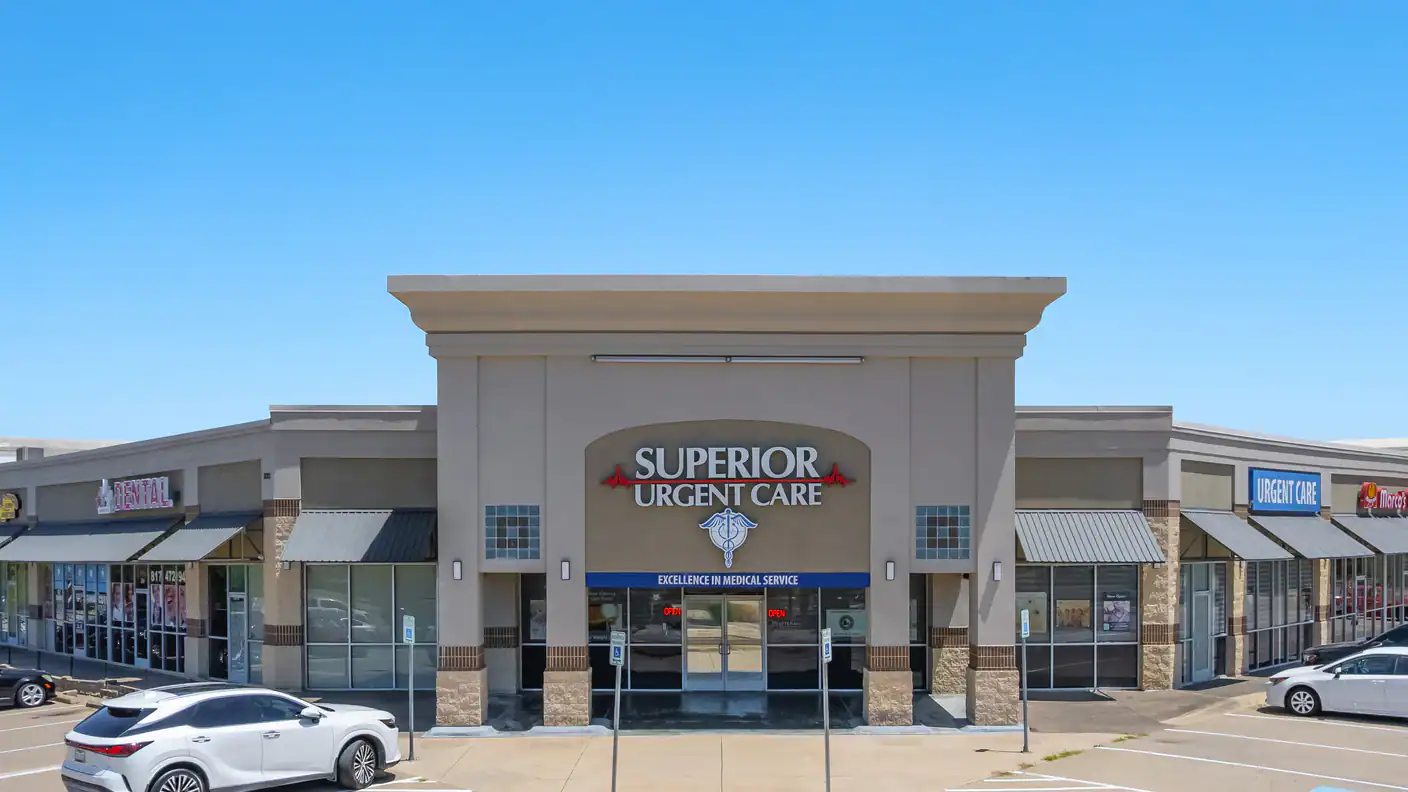
Every day, nearly 12,000 Americans turn 65. The repercussions of this progression play out in hundreds of different ways: infrastructure changes, employer shifts, workforce shortages, and regulatory adjustments to name just a few. One of the primary effects under discussion here is the rise of convenience-based healthcare, away from larger city centers and into growing suburban centers. This trend has contributed to what has become known as ‘Medtail’, or the integration of healthcare into retail spaces.
Legacy Commercial Property: Built for the Medtail Era
As a leader in convenience retail, with over 700 properties throughout the nation, Legacy Commercial Property is poised to deliver space that isn’t just equipped for this shift — in some ways, it was made for it. Our properties feature main-and-main positioning in the heart of many American towns, ample parking, easy ingress/egress, and flexible floor plans and suite sizes built to accommodate a wide range of tenants, healthcare included.
That positioning matters because healthcare itself is moving into spaces like ours. A wealthier, larger-than-ever senior cohort is reshaping spending toward health, wellness, and convenience. Food-and-beverage, fitness, and healthcare tenants now account for more than 50% of new retail leasing activity in many markets — increasingly filling former anchor and big-box vacancies with med spas, urgent care clinics, and other clinical uses. About 20% of leased medical space nationwide is now in retail settings, and CBRE projects healthcare real estate occupancy will reach 93–94% in 2026, with demand outpacing new supply by 3.1 million square feet across the top 50 U.S. markets
Convenience At the Core
As convenience cements itself as the primary concern in the average American’s life, no sector will be left untouched — including one of the largest in the country: healthcare. Patients over 65 already drive a disproportionate share of demand, projected to reach 42% by 2034, further accelerating the shift toward convenience-based, closer-to-home care as the traditional hospital-centric system struggles to keep pace.
That same desire for convenience shows up everywhere, from groceries delivered to the door to pet care shipped on autopilot, and healthcare is no exception. Medtail promises to bring that same speed, ease, and comfort to how people get care.
The Shift from Inpatient to Outpatient Care
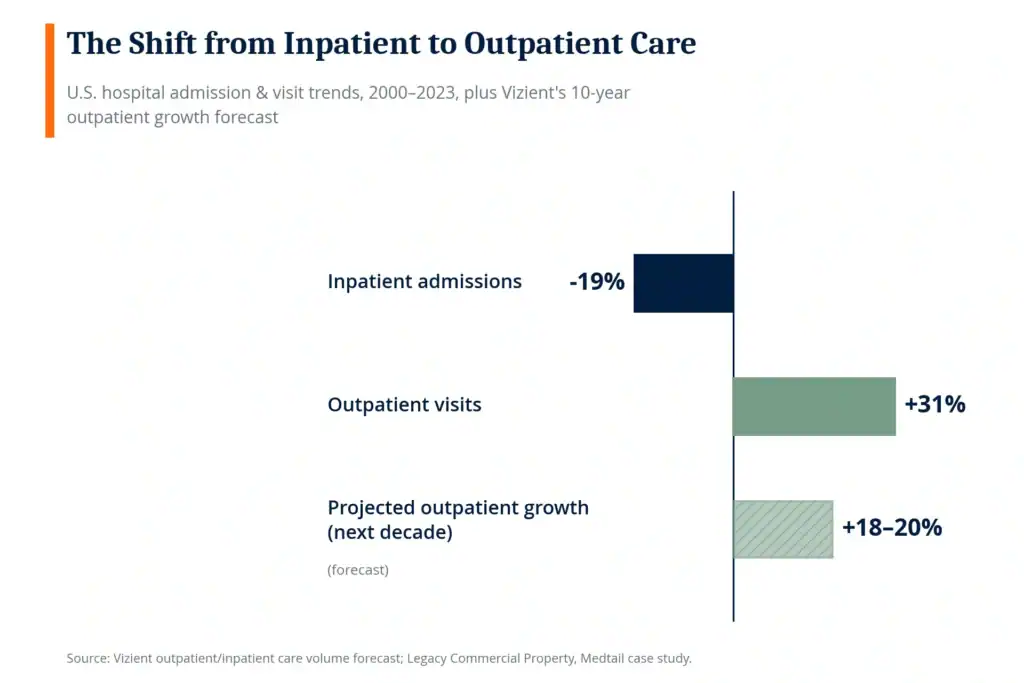
This trend isn’t new. Vizient forecasts 18–20% growth in outpatient care volumes over the next decade, compared to just 5–7% for inpatient care — a shift that has been progressing for years, with inpatient admissions falling nearly 19% between 2000 and 2023 while outpatient visits surged 31%.
That shift has shown up directly in our own portfolio. Since 2021, of the more than 700 leases we’ve signed across all locations, healthcare tenants have made up more than 16% of the mix — and over 19% in 2022 and 2023 alone, in the wake of the COVID pandemic.
Suburban Growth Is Fueling Demand for Convenience Retail
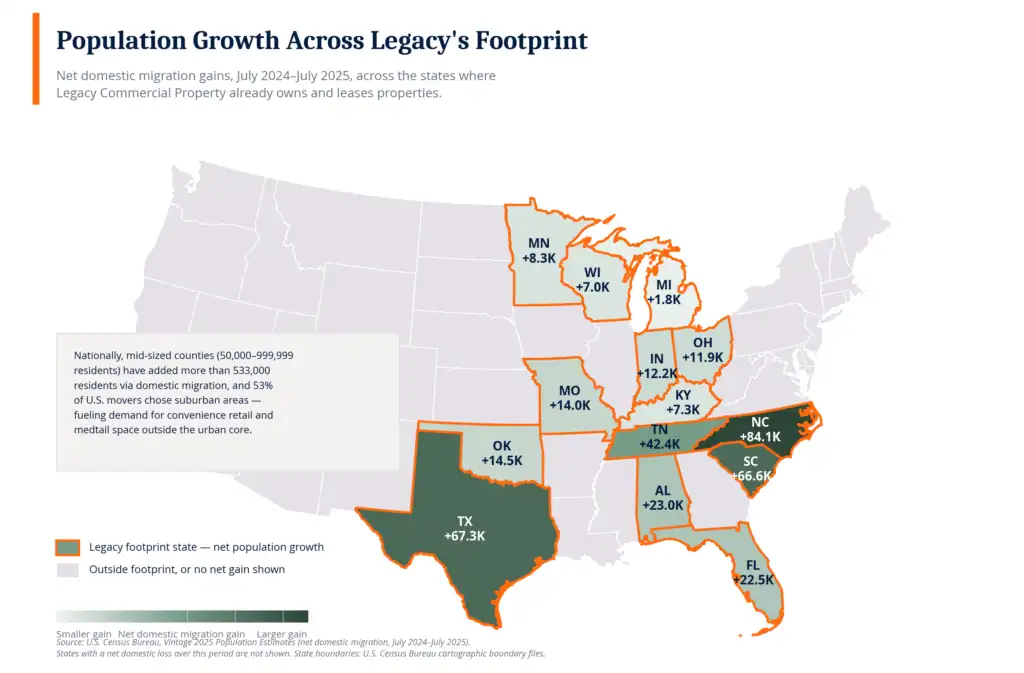
Population growth has also shifted decisively from urban cores to suburbs and exurbs: mid-sized counties (50,000–999,999 residents) posted a net domestic migration gain of more than 533,000 people, and 53% of U.S. movers chose suburban areas. As suburbs and small-town America keep growing, so will demand for convenience in healthcare — including a medtail space close to home over a hospital across town.
Legacy’s Growing Role in Medtail
Our own portfolio tells the same story: healthcare occupancy across our properties has risen consistently over the past five years.
A growing number of urgent care, ABA (applied behavior analysis) therapy, and veterinary tenants have joined our roster recently, extending medtail well beyond primary care and dental into more specialized categories.
Recent additions include an Aspen Dental location at our new development in Kimball, TN, Mission Vet at our new development in Lebanon TN, and over 10 new Lighthouse Autism centers scattered throughout our portfolio in the Midwest and North Carolina.
The trend shows no signs of slowing, and Legacy president Ben Hoogland isn’t surprised.
“We’ve seen firsthand how quickly convenience-based healthcare has taken hold across our properties. What used to be a handful of urgent care or dental leases has turned into one of the fastest-growing categories in our portfolio. It tells us something important: people want care that fits into their everyday lives, not the other way around. Our job has always been to build spaces that serve the way communities actually live, and healthcare is simply the next chapter of that.” – Ben Hoogland, President of LCP
Doctors of Physical Therapy is one of our tenants that can speak to the shift and direct impact as well, with three locations leased across our portfolio.
“Locating clinics in the kinds of convenient retail settings Legacy provides makes physical therapy more accessible and approachable. Patients can fit an appointment into their daily routine rather than making a separate trip to a hospital campus or medical office building. That convenience helps people seek care earlier, when problems are often easier to treat, and outcomes are better.
We’ve seen the rise of medtail and the growing focus on wellness fundamentally change how people see physical therapy. Traditionally, patients viewed PT as something you did after surgery or a serious injury. Today, more people recognize that physical therapists play a critical role in preventing injuries, improving performance, managing chronic pain, and helping people stay active throughout their lives.”
–Mark Matson, Doctors of Physical Therapy Marketing Director
While the landscape continues to move toward ease, Legacy Commercial Property remains rooted in providing American communities with what they need for daily life. Interested in our available locations? Visit our properties page to learn more.
